
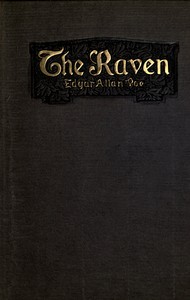
The Raven, and The Philosophy of Composition by Edgar Allan Poe
This book is actually two things in one. First, you get the full text of Edgar Allan Poe's legendary poem, 'The Raven.' You know the one—a grieving man alone in his chamber, haunted by a talking bird that only says one, devastating word. It's the ultimate gothic mood piece, full of shadows, lost love, and creeping madness.
The Story
'The Story' here is a bit different. The main event isn't a fictional plot, but Poe's own explanation of how he built 'The Raven.' In the accompanying essay, 'The Philosophy of Composition,' he walks us through his creative process from the last line backward. He decided he wanted to write a poem about 'the death of a beautiful woman,' which he called 'the most poetical topic in the world.' Then, he chose a refrain that was a single word for impact. He picked a raven because it could talk and fit the somber tone. He explains his choice of rhythm, the stanza structure, even the exact sound of the 'o' in 'Nevermore' to create a melancholic echo. He presents the whole thing as a logical puzzle he solved, not a burst of unpredictable genius.
Why You Should Read It
This is fascinating for anyone who loves stories, whether you write them or just devour them. Poe pulls back the curtain. It makes you see 'The Raven' in a new light—you appreciate the craft behind the chills. His argument that beauty and effect in writing come from careful planning, not chance, is both provocative and weirdly comforting. It demystifies the creative act. Sure, you can argue with him (maybe great art does need some wild inspiration!), but having the conversation with the master of the macabre himself is a thrill.
Final Verdict
Perfect for poetry lovers, aspiring writers, and anyone with a curious mind about how art gets made. If you've only ever read 'The Raven' in a vacuum, this pairing is essential. It's like watching a magic trick and then getting the detailed instruction manual from the magician. You won't look at a poem—or any piece of writing—the same way again.
This book is widely considered to be in the public domain. You do not need permission to reproduce this work.
Jennifer Robinson
1 year agoFrom the very first page, it creates a vivid world that you simply do not want to leave. I learned so much from this.
Charles Nguyen
4 months agoI stumbled upon this title and the storytelling feels authentic and emotionally grounded. Don't hesitate to start reading.
William Jackson
5 months agoAfter finishing this book, the arguments are well-supported by credible references. I couldn't put it down.
Dorothy Ramirez
1 year agoAfter hearing about this author multiple times, it creates a vivid world that you simply do not want to leave. I learned so much from this.
Joshua King
11 months agoThe layout is very easy on the eyes.