
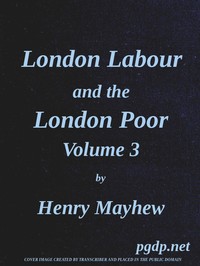
London Labour and the London Poor, Vol. 3 by Henry Mayhew
Forget kings, queens, and parliament. This book is about the people who swept the streets, hawked watercress, and picked pockets to survive. Henry Mayhew, a journalist, spent years walking through the worst parts of mid-1800s London, talking to the people everyone else stepped over. He didn't judge; he recorded. This third volume zooms in on the city's street sellers and small traders. You get their life stories in their own words—how much they earn (often pennies a day), what they eat, where they sleep (if they're lucky), and the constant fear of the workhouse or prison.
The Story
There's no traditional plot. Instead, it's a mosaic of lives. You'll follow the daily rounds of a costermonger selling fish from a barrow, arguing with customers and dodging the police. You'll sit with the 'pure-finders' (collectors of dog waste) as they describe their trade. You'll hear from women selling song-sheets and men performing with dancing bears. The 'story' is the sheer, overwhelming grind of poverty. Mayhew organizes it by trade, giving you a systematic, yet deeply personal, tour of an underground economy most Victorians pretended didn't exist.
Why You Should Read It
This book has a power that modern histories often lack: immediate, first-hand voices. You're not being told about poverty; you're hearing it from the source. The casual details are what stick with you—the description of a 'lodging house' where dozens sleep head-to-toe for a few pence, or the precise cost of a baked potato from a street vendor. It makes history visceral. It also shatters any romantic notion of the 'good old days.' These interviews are funny, tragic, proud, and desperate. You come away with immense respect for their ingenuity and a sobering understanding of their struggle.
Final Verdict
This isn't a light read, but it's a profoundly important one. It's perfect for anyone fascinated by social history, true crime (you see the roots of it in desperation), or the real London. Fans of Dickens will find the brutal reality that inspired his fiction. It's for readers who don't mind getting their hands dirty in the past and who believe history is best told by those who lived it, not just those who won it. Be prepared to have your perspective permanently altered.
There are no legal restrictions on this material. You do not need permission to reproduce this work.
Ethan Davis
1 year agoI didn't expect much, but the author's voice is distinct and makes complex topics easy to digest. I learned so much from this.
Ethan Hill
1 year agoI didn't expect much, but the content flows smoothly from one chapter to the next. Highly recommended.
Thomas Torres
1 year agoRead this on my tablet, looks great.
Thomas Hernandez
1 year agoNot bad at all.






Matthew Perez
1 year agoA bit long but worth it.